Saturday, August 18, 2012
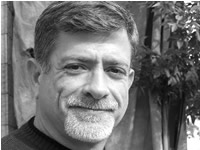
Dr. Mock has published Five books with Floricanto Press, Berklety, CA. His articles have appeared on publications like The Chicago Tribune and several gay and lesbian newspapers. He was inducted in The Chicago GLBT Hall of Fame in 2007. He can be reached at: www.carlostmock.com
Excerpt from Cuba Libre, Mentirita
Chapter Five
In 1843, Facundo Bacardí married a young woman named Amalia, daughter of a French Bonapartist fighter, and began a family. Around this time, his experiments with rum had paid off and he offered samples of his new light rum to relatives and friends. Facundo's secret formula enabled him to ferment, distill, and blend from molasses a rum one could drink neat, almost like wine, without mixers or additives. Since molasses was a byproduct of processing sugarcane, Cuba's largest export, there were ample quantities on the island. On February 4, 1862, Facundo, his brother Jose, and a French wine merchant joined forces to buy Nunes' tin-roofed distillery for $3,500. The facility had the necessities (a cast-iron still, fermenting tanks, and aging barrels) for creating and selling a Bacardi brand of rum. Buying the old distillery lock, stock, and barrel, Facundo also received an added bonus in the deal—a colony of fruit bats that later came to represent the Bacardi name.
The Bacardi enterprise was a family affair. As Facundo's three sons—Emilio, Facundo (Jr.), and José—came of age, they joined the company and learned their father's secret formula for making what was fast becoming the Caribbean's finest rum. Emilio, the oldest, worked in the office; Facundo Jr. worked in the distillery; and José, the youngest, eventually promoted and sold his father's products. In honor of his father and to celebrate the new family business, Facundo Jr. planted a coconut palm tree just outside the distillery. As the Bacardi boys learned their father's trade, a young man named Enrique Schueg y Chassin, born in 1862, the same year Don Facundo purchased the Santiago distillery, was maturing, and he would soon join both the business and the family, by marriage. As the business thrived in the ensuing years, young Facundo's coconut palm did, too. The tree became an enduring symbol of the Bacardi family and its of spirits operation.
Not long before Don Facundo and his partners bought the Nunes distillery, an Australian named T. S. Mort had perfected the first machine-chilled cold storage unit. Three years after Bacardi was established, Thaddeus Lowe debuted the world's first ice machine. Although these two inventions seemed unrelated to Don Facundo's new premium rum, they later helped Bacardi conquer the social drinking marketplace by making ice and cold mixers commonplace. Such ideas were far from Don Facundo and his family's minds, as they had no idea how widespread the appeal of their smooth, fine rum would become one day. Instead, they greeted Bacardi's increasing popularity in Santiago and the neighboring villages as a pleasant surprise.
As was the custom of the day, customers brought their own jugs and bottles to the distillery; and the Bacardi family members promptly filled and returned them. With business booming, Don Facundo decided that method of distribution was not good enough and set out to find an alternative. Meanwhile, back in Spain, Queen Isabella, who ascended the throne in 1843 at the age of 13, was deposed. For Bacardi and his family, as with most Catalans living on the Spanish-controlled colony of Cuba, the insurrection mirrored their own growing unrest. As civil war raged in Spain in 1872, Emilio, who had become a Cuban freedom fighter, was caught and exiled to an island off the coast of Morocco. During his absence, hostilities grew and a rebellion swept through Cuba, although the family business was unharmed. Emilio returned to Cuba four years after his capture and learned that Bacardi rum had earned a gold medal at the Philadelphia Exposition of 1876.
As the 1880s dawned, Don Facundo retired and turned Bacardi over to Emilio, Facundo Jr., Jose, and Enrique, now his son-in-law. The company's distribution problems had been solved with a suggestion from Doña Amalia that Bacardi products be sold with a distinctive, easily recognized, label. As many of Santiago's residents could not read, Doña Amalia recommended using a symbol to represent Bacardi. The Bacardi logo was born, sporting a most unlikely mascot, the fruit bat. Before the turn of the century, as Bacardi flourished, Cuba was again battling to gain independence from Spain. Fighting for his country, Emilio, was banished a second time and Enrique went with him into exile.
In 1901, as Cuba became an independent republic, Emilio returned home to the Bacardi family and business.
He was elected mayor of Santiago, while Bacardi continued buying sugarcane fields and expanding operation through several bottling facilities.
The world's most popular drink was born during the Spanish-American War at the turn of the century when Teddy Roosevelt, the Rough Riders, and Americans in large numbers arrived in Cuba. One afternoon, a group of off-duty soldiers from the U.S. Signal Corps were gathered in a bar in Old Havana. Fausto Rodríguez, a young messenger, later recalled that a captain came in and ordered Bacardi (Gold) rum with a new American concoction called Coca-Cola, served on ice, with a wedge of lime. The captain drank the concoction with such pleasure that it sparked the interest of soldiers around him. They had the bartender prepare a round of the captain's drink for them. The Bacardi rum and Coke was an instant hit. As it still does to this day, the drink united the crowd in a spirit of fun and good fellowship. When they ordered another round, one soldier suggested they also toast ¡Por Cuba Libre!, in celebration of newly freed Cuba. The captain raised his glass and sang out the battle cry that inspired Cuba's victorious soldiers in the War of Independence.

Saturday, August 11, 2012
Dr. Mock has published five books with Floricanto Press, Berklety, CA. His articles have appeared on publications like The Chicago Tribune and several gay and lesbian newspapers. He was inducted in The Chicago GLBT Hall of Fame in 2007. He can be reached at: www.carlostmock.com
Excerpt from Infinitas:
Una Obra realista mágica de la poesía - A Magical Realistic Work of Poetry
Este libro está dedicado a mi hermana, Maria I. (Mayu) Mock, quien falleció a la tierna edad de 46 años a causa de cáncer del cólon, el 10 de noviembre del 2008; a las 8:55 AM en San Juan, Puerto Rico.
This book is dedicated to my sister, Maria I. (Mayu) Mock who died from colon cancer at the young age of 46 in San Juan, PR on November 10, 2008 at 8:55 am.
10 de noviembre de 2008; 8:55 AM
Paren los relojes, cuelguen los teléfonos,
Apaguen la radio y el televisor.
Silencien los instrumentos de música
El planeta deja de rotar—marcará la ocasión.
Dejen que los pájaros circulen el cielo quejándose
Anunciando al mundo que Mayu ha desaparecido.
Las estatuas están de luto, los parques están vacíos
La isla está llorando—entren, escuchen, y siéntense en el salón.
Ella era mi norte, mi sur, mi este y mi oeste,
Mi semana de trabajo, mi ocio, y mi diversión.
Mi mediodía, mi medianoche, mi palabra y mi canción.
Creía que nuestro amor era infinito—pero se desvaneció.
No quiero ver las estrellas, apáguenlas una a una,
Desaparezcan la luna, apaguen el sol.
Vacíen lo océanos, quemen los bosques,
Lloremos nuestra pérdida con una sola voz.
Polvo somos y en polvo nos convertiremos,
Eso dice la tradición—pero mi querida Mayu
Vivirá eternamente en mi corazón
Hasta que la próxima poesía llore por mi desaparición.
November 10, 2008; 8:55 AM
Stop all the clocks, hang all the phones,
Turn off the radio and the T. V.
Silence the music
As the Earth stops its rotation, marking the occasion.
Allow birds to fly in mourning,
Singing that Mayu is gone from the world.
The statues will mourn her passing, by leaving the parks empty.
Puerto Rico cries--enter, listen, and sit in our home.
She was my North, my South, my East, and my West.
My workweek, my sorrow, and my fun.
She was noon, midnight, my word, and my song.
I though our love was eternal--but it disappeared in dust.
I don’t wish to count the stars, please turn them off.
Wipe the moon from the skies, burn off the sun.
Empty the oceans burn the woods,
Lets all cry the loss with one voice.
Dust to dust--as taught by religion.
But my beloved Mayu
Forever will live in my heart
Until the next poem cries for my soul.
Los Muertos se olvidan más fácilmente que los vivos
La caliente comodidad de mis sabanas blancas almidonadas
Al moldearse a mi cuerpo forman
Una barrera que excusa a mi cerebro de cualquier pensamiento.
Me quedo quieto.
Me ajusto a la moldura de la cama como mejor puedo.
Es como que si haciendo esa maniobra
Alcanzo un punto crítico
Y reconozco la absurdidad de mi muerte inminente,
Y me escondo entre las sombras, quedándome sólo eternamente.
El centro de inactividad hace que mi pensamiento
Rebote de alguna casualidad de crearlo,
Atándome así a mi cama en el hospital.
Por un lado,
El miedo me obliga a escapar,
A huir de la situación presente,
A alcanzar otra vida,
Pero antes de morir.
Por otro lado,
Los efectos de la morfina me hacen sordos,
Ciegos, e incapaz de ser estimulado.
Como si nada hubiera existido nunca—fantasmas de una pesadilla
Nada más. En un cuarto oscuro,
Sólo los monitores que me rodean rompen el silencio.
Trato de escuchar mi latido
A manera de buscar mi salvación.
Pero el miedo a la nada que me rodea es más fuerte
Y sueño que soy un cadáver que no se mueve.
Sueño el miedo horrible de no poder despertar.
Espero,
Sigo esperando,
Es como si esperara a que todos mis funciones vitales se apaguen.
Estoy aburrido de vivir
Espero al resto de mi verdadera existencia.
Es como si el ciclo de mi vida se termina,
Como si los cielos se cierran ante mi.
Parece interminable,
Como un perro que persigue a su rabo,
Un círculo cerrado fuera del tiempo.
Es como si fuera un fantasma,
Un espíritu sin fin.
Le tengo miedo a lo que me espera.
¿Qué hubiera sido de mi vida
Si hubiera conocido a mi pareja antes de la “plaga”?
¿Cómo serían nuestras vidas si nuestra relación
Hubiera empezado antes que la infección?
¿Seríamos negativos?
¿Hubiéramos sobrevivido las tentaciones del mundo gay?
Sueño con un mundo donde el SIDA no existe,
Tal vez no sea posible,
Tal vez sea sólo mi alucinamiento.
Nacer dentro de estas cuatro paredes del hospital,
Y crecer sin tentaciones ni peligros inminentes.
Distrayéndome con preguntas que no tienen respuestas.
A pesar de que no creo en el infierno,
El infierno es lo que vi en mis amistades,
Cuando perdieron su lucha contra el SIDA.
Y el cielo hubiera sido,
Alguien creando una píldora,
Que hiciera que la muerte y el sufrimiento desapareciera.
En este estado de pavor que me encuentro,
Esta es mi capacidad
Para entender los conceptos
Del cielo y el infierno.
En un período de pocos años,
Perdí a la mayoría de mis amigos.
Sus conciencias individuales desaparecieron.
Perdí una generación completa de hermanos,
Esa pérdida y sus recuerdos,
Es lo que me mantiene vivo hoy día.
Sus almas son la esencia que llamo “Vida.”
La muerte hace que la rabia forme parte del pasado,
Reconozco la profundidad de mi furia,
Aun cuando los dejo que se vayan,
Los Muertos se olvidan más fácilmente que los vivos
The dead are so much easier to forget than the living
The warm comfort from the bleached white sheets
Around my body is forming
A barrier that excuses my brain from the activity of thought.
I don’t move,
I simple adjust my body to the bed as best as I can.
It is as if that by doing so
I reach a critical point of view
And acknowledge the absurdity of my impending death,
I can forestall anyone’s attention, forever being left alone.
The center of inactivity makes any thought process
Rebound from any chance of being created,
Thus keeping me anchored to my hospital bed.
On the one hand,
The fear begs me to try to escape,
To run away from the present situation,
Which seems to be the after life,
Yet before death.
On the other hand,
The analgesic effects of my morphine induced high makes me deaf,
Blind, and thoughtless to any stimuli.
It’s like nothing ever existed—ghostly figures from a bad dream
Nothing more. In the dark room,
Only the monitors that surround me break the silence.
I try to hear my heartbeat,
As if the clue to my salvation.
But the fear of the nothingness around me is much stronger
And I dream of myself as an inanimate cadaver.
I dream of the terrible fear of not being able to wake up.
I wait,
I continue to wait.
It is as if I am waiting for all my bodily functions to cease.
It’s too boring to be alive.
I am waiting for the real rest of my existence.
It is as if the cycle of life is coming to an end,
As if the skies are closing on me.
It seems endless,
Like a dog chasing its tale,
A closed circle outside of time.
It’s as if I’m a ghost,
A spirit without end.
I am very afraid of what this world has in store for me.
How would my life be if I met my partner before the “plague”?
How would it be if our relationship had started
Before we were infected?
Would we still be negative?
Would we have survived the temptations of the gay world?
I dream of a world where AIDS never existed,
Perhaps this is not possible,
Perhaps this is nothing more that a delusion
Born inside these four hospital walls.
To tempt me to forget the immediate and tangible danger
By distracting myself with questions that can’t be answered.
In as much as I do not believe in hell,
Hell is what I saw in many of my friends
As they fought and endured the gay plague.
Heaven would have been
Someone finding a pill
To make all the suffering and death disappear.
In my blurred state, this is as close
As I’ll ever get to understanding
Heaven and hell.
Within a few years
I saw most of my friends disappear;
Their individual consciousness vanish
And I lost whole generations on my brothers.
Their loss, trying to remember them,
Is what keeps me alive now?
Their souls are the essence that I’ll call “Life.”
Death puts anger in the past tense.
I recognize the depth of my fury
Even as I let go of them
The dead are so much easier to forget than the living.
Trato de silbar en la oscuridad
A veces el único orden en la vida y el universo
Es la injusticia y el caos.
Eso explicaría por qué la locura es la única forma
De integrarse a la realidad.
Deseo esa locura,
Para que me ayude con mi terror a la muerte y a la extinción.
Por primera vez en mi vida,
Me siento indefenso,
Ni la vida, ni la fe,
Ni ninguna estructura que me rodea,
Nada…
Solo el pánico.
¿Qué otras experiencias me faltan?
La muerte y nada más.
Y con la muerte viene un sentimiento
De terror porque
A pesar de todas las teorías filosóficas,
A pesar de todas las creencias religiosas,
NADA es relevante ahora.
Son como una excusa,
Para aliviar el golpe de la extinción.
¿Parezco morboso?
Trato de olvidar
Silbando en la oscuridad.
No tengas miedo,
No creas en la muerte.
La muerte es un sueño,
Como un juego infantil.
Juego a morirme antes de ir de compras.
Vuelvo a silbar en la oscuridad.
Cuando reconozco el sonido,
Me reafirma que estoy aquí y ahora.
I try whistling in the darkness
Sometimes the only order in life and the universe
Is injustice and chaos.
That would explain why madness is the only way
To become integral with reality.
I wish for madness
To help me cope with my fear of death and extinction.
For the first time in my life
I feel defenseless,
Nor life, nor faith,
Nor any of the structures that surround me,
Nothing…
Nothing more than fear.
What other experiences are left?
Death and nothing else.
And with death comes the feeling
Of terror because
In spite of all the philosophical theories,
In spite of any religious belief,
They ALL seem irrelevant right now.
They seem like an excuse,
To soften the panic of extinction.
Is it morbid?
I try not to think about it.
I try whistling in the darkness.
Do not be afraid,
Don’t believe in death.
Death is a dream,
Like an infantile game.
I will play dead and then go shopping.
I try whistling in the darkness again.
As I hear my own sound,
It reassures me that I’m here and now.
Monday, August 6, 2012
Dr. Mock has published five books with Floricanto Press, Berklety, CA. His articles have appeared on publications like The Chicago Tribune and several gay and lesbian newspapers. He was inducted in The Chicago GLBT Hall of Fame in 2007. He can be reached at: www.carlostmock.com
Excerpt from Mosaic Virus: A medical thriller that involves a cover up at the Vatican to protect a Cardinal from being accused to be a pedophile.
Giuseppe Cardinal Siri sat in his office at the Vatican, an office second in grandeur only to the Pontiff’s; he was lost in thought wondering how worried he should be. He had been looking at this quandary all day when he realized he was hungry. One look at the clock and he understood why—he had once again missed dinner.
He was a short round man, with small hands and feet, a dewlapped face, and a high domed head, bald as an egg under the scarlet skullcap. His grey eyes twinkled with benevolence and his mouth was as small and scarlet as a woman’s against the matte olive of his complexion. But the appearance was deceiving. He had a PH. D. in Theology and he was both feared and respected by the Pope’s allies and enemies alike.
It was now 1983 and Cardinal Siri had been Secretary of Sate for five years. He had quickly learned that his great challenge was in convincing people to do things they did not want to do and to get them to tell him things they would rather keep secret.
Although his personal apartment was austere and simple, he had filled his office with objects that reflected his power. He had handpicked the art and furniture from the vast collection at the Vatican Museum and Archives. On the far wall was a rare painting of the Madonna by Sandro Botticelli. Merely the gilded elaborate frame would impress even the most ignorant. Immediately behind him was a pen and ink Michelangelo study of the Pieta whose final version was in the Great Basilica below. In contrast, this was not framed flamboyantly as the Botticelli. But the importance of the work was rarely lost to anyone who stood in front of the Cardinal. It was enough to make anyone think twice before responding to the request of the powerful man who claimed its possession.
Underneath the Botticelli was a sixteenth-century desk used by Pope Pius V on top of which was his favorite possession. He had discovered it in the flea market off via Veneto: a simple clay sculpture of the three monkeys. This was to remind him that although it was true he would never speak evil, it was also true that he could sometimes not avoid hearing or seeing it.
On his vast desk there were only two pictures—one of the Pontiff, the other of his parents who had died in one of Stalin’s labor camps. Looking at his parents’ picture he knew they would be stunned with joy that he was sitting at the right hand of the Pontiff, responsible for the safety of the Church; they would be in equal measure disappointed at what he often had to do to defend it.
He thought of his easier days as Bishop of Genoa—not easier, perhaps, but certainly different. He had relished the Mass and the interaction with his congregants. He had expected that his life would change because of his newly acquired power, but he had never imagined the loneliness. He now did his work through memos, meetings, and committees. He worked through innumerable assistants who would bring him leather-covered documents for his signature and seal, never exchanging a word with him unless necessary. Siri had realized that his days at work were so long, so composed of barely a few acts—performed over and over and over again—that they made of themselves a world within the World. All the men in Siri’s world lived primarily there, and paid a visit to the real world—where they ate, rested, and made ready to return. The men in Siri’s world had relinquished their citizenship to their respective countries of origin, and their former lives were dreams they had each night, from which they awakened each morning at the Vatican.
It had been over five years since he had ordained or counseled a priest and he missed the involvement enormously. Since he had become the principal advisor to the Pontiff, even his friends no longer felt comfortable confiding in him—except those with an agenda.
Siri’s life was now ruled more by the crisis-of-the-moment than opportunity. Last Christmas he had missed his traditional midnight mass at the Genoa Cathedral in order to fly to Beijing to negotiate the release of the bishop of Shanghai. He had been forced to shut down the mission in Tibet that had proved embarrassing to the Chinese. He had accomplished his objective by securing the bishop’s release, yet it had come at a cost. As he flew home from China, he wondered if it had been worth it.
His intercom lit to announce the arrival of his assistant. As he stood to open the door, he considered taking comfort in a discussion of his predicament with a reliable ear.
Cardinal Siri welcomed Lorenzo Cardinal Matta to his office.
“I have been expecting you,” Siri said to his assistant, breaking the awkward silence in the large office.
“Your summons sounded urgent,” was Matta’s polite, but respectful response.
Cardinal Matta was his right hand. He had been crucial to Cardinal Siri as secretary of state. Pius XII had also made Matta a cardinal; they had had long hard careers together. Matta was tall and heavy, with the appearance of an athlete, even for his seventy years. His face was always without any expression, making it hard to read.
Siri paused, then said, “I have yet to decide how urgent this matter is.” He always trusted his assistant with important news, and he felt compelled to act only after hearing his advice. “Thirty-seven deaths in the Northeast region of the United States, all of them priests—what do you think?”
Matta did not answer immediately, which lead Siri to wonder how much of this news was a surprise to Cardinal Matta.
“Your eminence, there are forty six thousand priests in the United States, about a fourth of those in this particular region. Only six percent of American priests are younger than thirty-five, with their population aging rapidly and not being replaced. The institutional forms of priesthood, as we have known them over the past several hundred years, are moving toward death.”
Cardinal Siri reflected. That had been his original gut reaction. Sitting down to look at the report again he added, “In this report, the ages of the deceased range from thirty-one to sixty three years old, with more than half of them under forty. Should we not lose our older priests first?”
Deep in thought Cardinal Matta asked, “Seriously, you are not thinking a conspiracy?”
“It is my duty to think of conspiracies—it is everyone else’s task to disprove them!”
Cardinal Matta waited for Siri to calm down, “If you are thinking about the Zionist groups, there are no new developments…”
The phrase sent chills up Cardinal Siri’s spine. The image of a sixteen year old Jew came back to haunt him. Trying to avoid showing Matta the impact those words still had on him, he diverted his full attention to getting his friend out of the room so he could be left alone.
“There are also rumors about DDT and other dioxin poisonings in the Soviet Union,” Siri said.
“Yes, yes, of course. And the Stasi is still trying to kill his eminence—how many problems do you want me to concentrate on? We have enough real problems without inventing new ones!”
“I tell you Matta, I am convinced this is the tip of an iceberg. I think we need an investigation…”
“If you decide to have an investigation, have you thought of who will lead it?”
Siri was again perplexed by Matta’s question and wondered how many eyes had already seen the report in front of him labeled Secret. “I sent for Javier Barraza. He has proven valuable to us before.” The secretary of State rose, which meant the interview was over.
Matta was delighted by the choice, but simply said, “Your eminence, if you think this through you will agree with me that you are making too much of nothing.”
“Matta, start working on some leads. I want you to meet with Barraza in the morning and have something for him to work on. Get a team together.” Siri thought it was better to be cautious, to keep divine things from being devoured by vengeful jealousy.
As Siri walked his assistant to the door, Matta added in a more conciliatory note, ”Giuseppe, as always, I am glad to be of help…”
Loneliness and stress always brought Siri back to the face of little Jacob. In the spring of 1939, the Chief Rabbi of Palestine, Isaac Herzog, asked the then Bishop of Genoa, Giuseppe Siri, to intercede to keep Jews in Spain from being deported to Germany. General Franco declared his Fascist government and the Spanish Civil War broke out. Out of the 35,000 volunteers of the International Brigades, approximately 7000 were Jewish. During the Second World War Spain officially remained neutral, yet, Franco sent troops to fight against the Russians, and Spain later served as a refuge for fleeing Nazis. Siri had traveled to Spain on behalf of the Vatican and had met with a group of children.
With his Vatican passport Bishop Siri had no trouble crossing the borders of Italy, France, and Spain. He was welcomed in Garnatha Alyehud, the Jewish ghetto in Granada. For weeks, he tried to send the Jewish people to Britain or the Americas. He had hired a young Jewish boy, Jacob Goldman, as his secretary and translator. He had spent three months working hard and had gotten most of the population off to safer ground. He had become attached to this youth who so selflessly worked to save the life of people he hardly knew. When it came time to leave, young Jacob asked if he could continue to serve his new hero. Siri was both touched and excited. Young Jacob wanted to follow in his savior’s steps. Using his Vatican connections he got Jacob a new passport and a non-Jewish identity—Joseph Spellman—thus returning with the boy to Rome after his mission was accomplished. Siri was sure young Joseph would make a great priest.
But on his return to Rome, things had changed. The Papal Secretary of State, Pacelli, signed a concordat with the German government. Siri felt that the signing of the concordat was a mistake by the Roman Catholic Church because it gave Hitler’s regime international sanction, given that at the time it was signed, the Enabling Act of March 23 had already granted Hitler dictatorial powers—mass arrests and book-burnings had taken place, and the first official concentration camp, Dachau, had been created. Siri recalled his words to his friend Matta: “It is not my right to question the wisdom of his eminence, but should we remain a bit more neutral?”
All political parties in Germany, except for the Nazis, had effectively been dissolved by July 14. On 2 March 1939, Pacelli became the first Secretary of State since 1667 to become pope; he took the name Pope Pius XII. Siri often wondered if the concordat was a deliberate act to assure the new Pope his election. Was the College of Cardinals also afraid of Hitler? Did they think Pacelli would be the only one who could keep Hitler at bay?
Later, Siri was relieved when Pope Pius XII issued a policy of public neutrality during the Second World War mirroring that of Pope Benedict XV during the First World War. Even though Siri understood that Pius’s main argument for that policy was that public condemnation of Hitler and Nazism would have achieved little of practical benefit and most likely would add to repression of Roman Catholicism within Nazi Germany, he was secretly disappointed that the new Pontiff could not take a stand against such a tyrannical regime. Then came word that Hitler was planning to kidnap Pope Pius XII. Gen. Karl Wolff, the head of the SS in German-occupied Rome accused the Vatican of being a “friend of the Jews.” When Bishop Matta, who was the head of security at the Vatican, discovered the identity of the seminarian Joseph Spellman (Jacob Goldman), he called the SS and turned him in to the Germans over the objection of a horrified Siri. The bishop of Genoa still remembered the last look from Jacob/Joseph, his cries of fear and misery, as the SS came and broke into Siri’s office to take the young man away.
Siri went to Pope Pius XII to beg for the life of his protégé. The Pontiff told him some of the victims could still be saved, but only through discreet private interventions. Siri tried everything that he could think of: calling all his old friends in the Vatican and any of the most fervent Nazi Catholics. To no avail. On December 30, 1940, Jacob/Joseph said goodbye to his mentor as he was placed on a train to Auschwitz. The look in Jacob’s eyes had stayed with Siri for over forty years.
He saw Joseph after his release from the concentration camp. Emaciated and beaten—he was far from the enthusiastic youth who had worked with him in Spain. Not even when Pope Pius XII rewarded the just-released Joseph by elevating him to Cardinal in 1946, was he able to forget the misery he had been unable to prevent. His reminiscing turned to a nagging pain in his stomach: “I must go see the doctor…”
Then Siri told himself, “Ah, it can probably wait until tomorrow.” He had thirty-seven deaths to explain…
Subscribe to:
Comments (Atom)