Monday, August 6, 2012
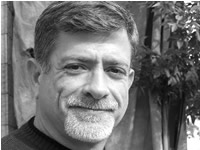
Dr. Mock has published five books with Floricanto Press, Berklety, CA. His articles have appeared on publications like The Chicago Tribune and several gay and lesbian newspapers. He was inducted in The Chicago GLBT Hall of Fame in 2007. He can be reached at: www.carlostmock.com
Excerpt from Mosaic Virus: A medical thriller that involves a cover up at the Vatican to protect a Cardinal from being accused to be a pedophile.
Giuseppe Cardinal Siri sat in his office at the Vatican, an office second in grandeur only to the Pontiff’s; he was lost in thought wondering how worried he should be. He had been looking at this quandary all day when he realized he was hungry. One look at the clock and he understood why—he had once again missed dinner.
He was a short round man, with small hands and feet, a dewlapped face, and a high domed head, bald as an egg under the scarlet skullcap. His grey eyes twinkled with benevolence and his mouth was as small and scarlet as a woman’s against the matte olive of his complexion. But the appearance was deceiving. He had a PH. D. in Theology and he was both feared and respected by the Pope’s allies and enemies alike.
It was now 1983 and Cardinal Siri had been Secretary of Sate for five years. He had quickly learned that his great challenge was in convincing people to do things they did not want to do and to get them to tell him things they would rather keep secret.
Although his personal apartment was austere and simple, he had filled his office with objects that reflected his power. He had handpicked the art and furniture from the vast collection at the Vatican Museum and Archives. On the far wall was a rare painting of the Madonna by Sandro Botticelli. Merely the gilded elaborate frame would impress even the most ignorant. Immediately behind him was a pen and ink Michelangelo study of the Pieta whose final version was in the Great Basilica below. In contrast, this was not framed flamboyantly as the Botticelli. But the importance of the work was rarely lost to anyone who stood in front of the Cardinal. It was enough to make anyone think twice before responding to the request of the powerful man who claimed its possession.
Underneath the Botticelli was a sixteenth-century desk used by Pope Pius V on top of which was his favorite possession. He had discovered it in the flea market off via Veneto: a simple clay sculpture of the three monkeys. This was to remind him that although it was true he would never speak evil, it was also true that he could sometimes not avoid hearing or seeing it.
On his vast desk there were only two pictures—one of the Pontiff, the other of his parents who had died in one of Stalin’s labor camps. Looking at his parents’ picture he knew they would be stunned with joy that he was sitting at the right hand of the Pontiff, responsible for the safety of the Church; they would be in equal measure disappointed at what he often had to do to defend it.
He thought of his easier days as Bishop of Genoa—not easier, perhaps, but certainly different. He had relished the Mass and the interaction with his congregants. He had expected that his life would change because of his newly acquired power, but he had never imagined the loneliness. He now did his work through memos, meetings, and committees. He worked through innumerable assistants who would bring him leather-covered documents for his signature and seal, never exchanging a word with him unless necessary. Siri had realized that his days at work were so long, so composed of barely a few acts—performed over and over and over again—that they made of themselves a world within the World. All the men in Siri’s world lived primarily there, and paid a visit to the real world—where they ate, rested, and made ready to return. The men in Siri’s world had relinquished their citizenship to their respective countries of origin, and their former lives were dreams they had each night, from which they awakened each morning at the Vatican.
It had been over five years since he had ordained or counseled a priest and he missed the involvement enormously. Since he had become the principal advisor to the Pontiff, even his friends no longer felt comfortable confiding in him—except those with an agenda.
Siri’s life was now ruled more by the crisis-of-the-moment than opportunity. Last Christmas he had missed his traditional midnight mass at the Genoa Cathedral in order to fly to Beijing to negotiate the release of the bishop of Shanghai. He had been forced to shut down the mission in Tibet that had proved embarrassing to the Chinese. He had accomplished his objective by securing the bishop’s release, yet it had come at a cost. As he flew home from China, he wondered if it had been worth it.
His intercom lit to announce the arrival of his assistant. As he stood to open the door, he considered taking comfort in a discussion of his predicament with a reliable ear.
Cardinal Siri welcomed Lorenzo Cardinal Matta to his office.
“I have been expecting you,” Siri said to his assistant, breaking the awkward silence in the large office.
“Your summons sounded urgent,” was Matta’s polite, but respectful response.
Cardinal Matta was his right hand. He had been crucial to Cardinal Siri as secretary of state. Pius XII had also made Matta a cardinal; they had had long hard careers together. Matta was tall and heavy, with the appearance of an athlete, even for his seventy years. His face was always without any expression, making it hard to read.
Siri paused, then said, “I have yet to decide how urgent this matter is.” He always trusted his assistant with important news, and he felt compelled to act only after hearing his advice. “Thirty-seven deaths in the Northeast region of the United States, all of them priests—what do you think?”
Matta did not answer immediately, which lead Siri to wonder how much of this news was a surprise to Cardinal Matta.
“Your eminence, there are forty six thousand priests in the United States, about a fourth of those in this particular region. Only six percent of American priests are younger than thirty-five, with their population aging rapidly and not being replaced. The institutional forms of priesthood, as we have known them over the past several hundred years, are moving toward death.”
Cardinal Siri reflected. That had been his original gut reaction. Sitting down to look at the report again he added, “In this report, the ages of the deceased range from thirty-one to sixty three years old, with more than half of them under forty. Should we not lose our older priests first?”
Deep in thought Cardinal Matta asked, “Seriously, you are not thinking a conspiracy?”
“It is my duty to think of conspiracies—it is everyone else’s task to disprove them!”
Cardinal Matta waited for Siri to calm down, “If you are thinking about the Zionist groups, there are no new developments…”
The phrase sent chills up Cardinal Siri’s spine. The image of a sixteen year old Jew came back to haunt him. Trying to avoid showing Matta the impact those words still had on him, he diverted his full attention to getting his friend out of the room so he could be left alone.
“There are also rumors about DDT and other dioxin poisonings in the Soviet Union,” Siri said.
“Yes, yes, of course. And the Stasi is still trying to kill his eminence—how many problems do you want me to concentrate on? We have enough real problems without inventing new ones!”
“I tell you Matta, I am convinced this is the tip of an iceberg. I think we need an investigation…”
“If you decide to have an investigation, have you thought of who will lead it?”
Siri was again perplexed by Matta’s question and wondered how many eyes had already seen the report in front of him labeled Secret. “I sent for Javier Barraza. He has proven valuable to us before.” The secretary of State rose, which meant the interview was over.
Matta was delighted by the choice, but simply said, “Your eminence, if you think this through you will agree with me that you are making too much of nothing.”
“Matta, start working on some leads. I want you to meet with Barraza in the morning and have something for him to work on. Get a team together.” Siri thought it was better to be cautious, to keep divine things from being devoured by vengeful jealousy.
As Siri walked his assistant to the door, Matta added in a more conciliatory note, ”Giuseppe, as always, I am glad to be of help…”
Loneliness and stress always brought Siri back to the face of little Jacob. In the spring of 1939, the Chief Rabbi of Palestine, Isaac Herzog, asked the then Bishop of Genoa, Giuseppe Siri, to intercede to keep Jews in Spain from being deported to Germany. General Franco declared his Fascist government and the Spanish Civil War broke out. Out of the 35,000 volunteers of the International Brigades, approximately 7000 were Jewish. During the Second World War Spain officially remained neutral, yet, Franco sent troops to fight against the Russians, and Spain later served as a refuge for fleeing Nazis. Siri had traveled to Spain on behalf of the Vatican and had met with a group of children.
With his Vatican passport Bishop Siri had no trouble crossing the borders of Italy, France, and Spain. He was welcomed in Garnatha Alyehud, the Jewish ghetto in Granada. For weeks, he tried to send the Jewish people to Britain or the Americas. He had hired a young Jewish boy, Jacob Goldman, as his secretary and translator. He had spent three months working hard and had gotten most of the population off to safer ground. He had become attached to this youth who so selflessly worked to save the life of people he hardly knew. When it came time to leave, young Jacob asked if he could continue to serve his new hero. Siri was both touched and excited. Young Jacob wanted to follow in his savior’s steps. Using his Vatican connections he got Jacob a new passport and a non-Jewish identity—Joseph Spellman—thus returning with the boy to Rome after his mission was accomplished. Siri was sure young Joseph would make a great priest.
But on his return to Rome, things had changed. The Papal Secretary of State, Pacelli, signed a concordat with the German government. Siri felt that the signing of the concordat was a mistake by the Roman Catholic Church because it gave Hitler’s regime international sanction, given that at the time it was signed, the Enabling Act of March 23 had already granted Hitler dictatorial powers—mass arrests and book-burnings had taken place, and the first official concentration camp, Dachau, had been created. Siri recalled his words to his friend Matta: “It is not my right to question the wisdom of his eminence, but should we remain a bit more neutral?”
All political parties in Germany, except for the Nazis, had effectively been dissolved by July 14. On 2 March 1939, Pacelli became the first Secretary of State since 1667 to become pope; he took the name Pope Pius XII. Siri often wondered if the concordat was a deliberate act to assure the new Pope his election. Was the College of Cardinals also afraid of Hitler? Did they think Pacelli would be the only one who could keep Hitler at bay?
Later, Siri was relieved when Pope Pius XII issued a policy of public neutrality during the Second World War mirroring that of Pope Benedict XV during the First World War. Even though Siri understood that Pius’s main argument for that policy was that public condemnation of Hitler and Nazism would have achieved little of practical benefit and most likely would add to repression of Roman Catholicism within Nazi Germany, he was secretly disappointed that the new Pontiff could not take a stand against such a tyrannical regime. Then came word that Hitler was planning to kidnap Pope Pius XII. Gen. Karl Wolff, the head of the SS in German-occupied Rome accused the Vatican of being a “friend of the Jews.” When Bishop Matta, who was the head of security at the Vatican, discovered the identity of the seminarian Joseph Spellman (Jacob Goldman), he called the SS and turned him in to the Germans over the objection of a horrified Siri. The bishop of Genoa still remembered the last look from Jacob/Joseph, his cries of fear and misery, as the SS came and broke into Siri’s office to take the young man away.
Siri went to Pope Pius XII to beg for the life of his protégé. The Pontiff told him some of the victims could still be saved, but only through discreet private interventions. Siri tried everything that he could think of: calling all his old friends in the Vatican and any of the most fervent Nazi Catholics. To no avail. On December 30, 1940, Jacob/Joseph said goodbye to his mentor as he was placed on a train to Auschwitz. The look in Jacob’s eyes had stayed with Siri for over forty years.
He saw Joseph after his release from the concentration camp. Emaciated and beaten—he was far from the enthusiastic youth who had worked with him in Spain. Not even when Pope Pius XII rewarded the just-released Joseph by elevating him to Cardinal in 1946, was he able to forget the misery he had been unable to prevent. His reminiscing turned to a nagging pain in his stomach: “I must go see the doctor…”
Then Siri told himself, “Ah, it can probably wait until tomorrow.” He had thirty-seven deaths to explain…

Subscribe to:
Post Comments (Atom)
No comments:
Post a Comment